- Home
-

- Archive
All posts by Thomas Ng

A couple of years ago, a seasoned educator friend explained the Flip classroom concept to me. Traditionally, a teacher would stand in front of a class and deliver a topic or subject to the class. At the end of it, the teacher would give some homework to the students. When the students are home, they will try to do the homework, trying very hard to recall what was taught in class, and to apply it to the homework. What mostly happens is that the student will try to get help from an elder sibling, or parents. And very often this will eventually lead to private tutoring. In the Flip classroom, when the students are home, they watch videos on the topic or subject which the teacher is supposed to deliver in class. This could be a video done by the teacher, or any relevant video on the topic from anywhere. This can be augmented by other online tools like animation, quizzes, etc. When the students come to class, they do their homework i.e. try to apply the knowledge. And the teacher there is there to help and guide them. How cool is that?
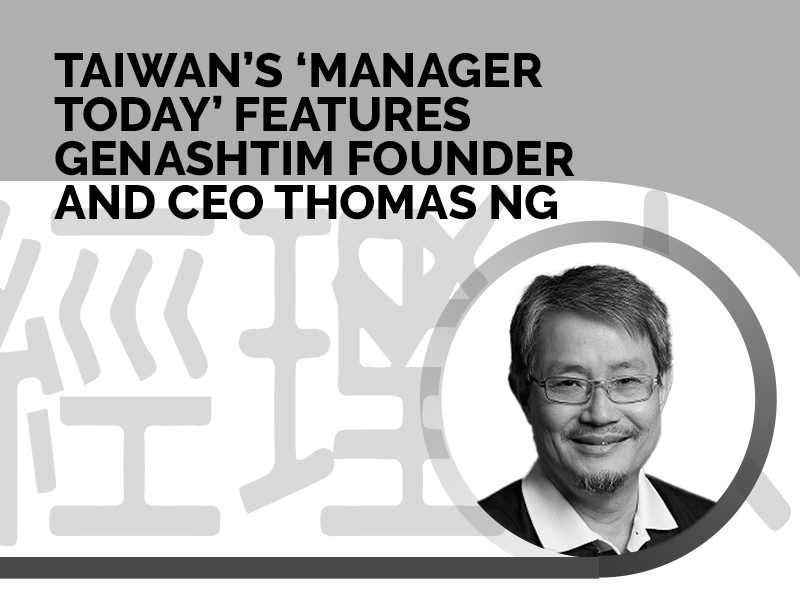
Thomas Ng shares Genashtim's social impact business model, dubbed as the indifferent work methods design in this MANAGER Today article. The feature also highlights that Genashtim's business operations do not contribute to the human carbon footprint.

I still encounter too often, resistance to eLearning within the corporate world. So when I was asked to write an article about eLearning, I thought I would approach it differently, with a bit of tongue-in-cheek. Hope you enjoy reading it was much I did writing it (click here).
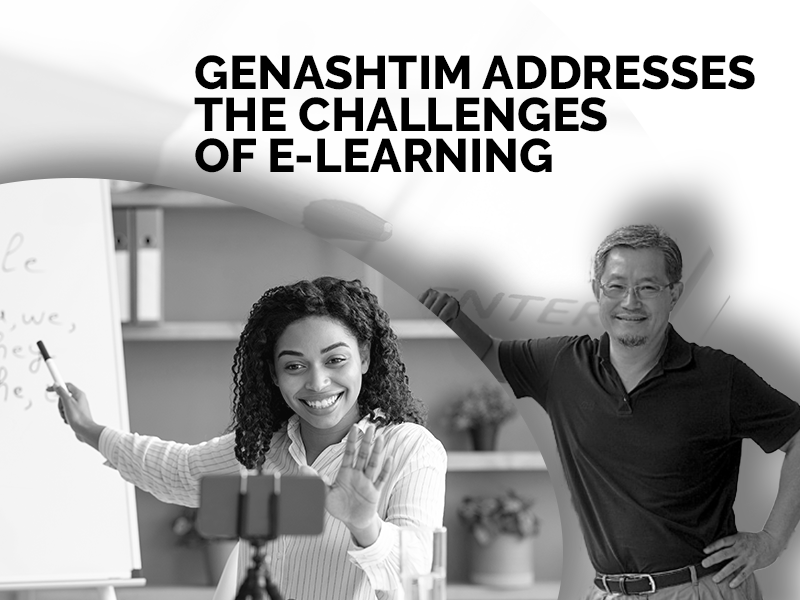
In an Up Magazine feature, Thomas Ng shares his expertise as an eLearning proponent with the Institute for Adult Learning in Singapore. He stresses the need for companies to adapt to external changes and to recognize the relevance and impact that eLearning brings to businesses.
I would like to salute South Africa for taking bold steps in investing in the future.
Some years ago, I was on a plane to Bangkok, with my best friend, who has since passed away. He was in the real property development business. He commented that schools are probably one of the most under-utilized category real estate. Many rich people desire to build schools, particularly in the rural areas to reach out to the less privileged corners of society. But all too often, after a few years, such schools are dilapidated and abandoned. Maintenance is costly, and will not be sufficiently funded from school fees. On top of that, getting good teachers to the far flung provinces is a challenge. We then brainstormed about fitting out old shipping containers with PC workstations. Then collaborate with local telcos to provide not only internet connection, but also access to cellular signal. Consider also the possibility of having solar panels on the roof, so that this “container internet center†can operate without being connected to the grid. Look for a village that is receptive, and plonk this down there. Children from the village and surrounding areas can come to these “container internet centers†and access the internet for world class online education, and have world class educators connecting with them. When not used for this purpose, this can be used as any internet center for recreation, for communication, or for doing work online. The fees earned from this, and for selling cell phones, load and accessories, will hopefully be able to maintain this facility. If for any reason, it does not work out, this can be pulled out and plonked down somewhere else. Probably is not as simply as it sounds, but I hope one day to find out.
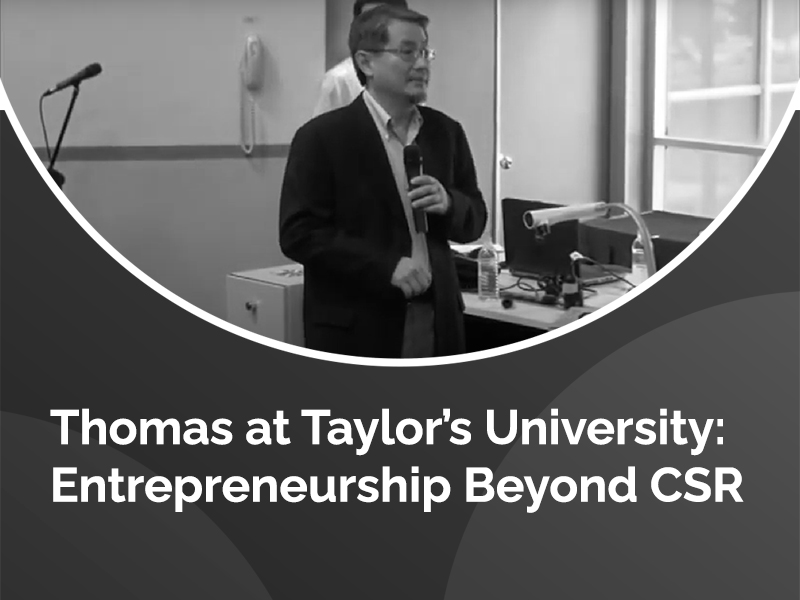
Thomas speaks about corporate social responsibility at Taylor's University Lakeside Campus.

Whilst I keep preaching that with technology and the internet, we can reach most parts of the world, there are areas which are still not yet quite there. This example of an innovative solution for children who do not even have a desk in the classroom is one which I wish I had thought of (click here). Innovation is indeed a mindset, and not just about technology. We have to keep thinking of better ways to do things, and to solve problems.

In one of my earlier blogs about the state of funding for universities, and how online education is changing the game, I promised to write more on my excitement with how technology and the internet will trigger the revolution and evolution wherein the best content can be delivered by the best educators to most remote and marginalized communities. Traditionally, the best schools recruited the best students. The parents of these students probably also studied in these best schools, befriended other privileged kids who supported each other in their privileged careers, and have privileged children who then go to these privileged schools. These privileged schools would always be in privileged neighborhoods. The best educators would hence be attracted to these privileged schools. I think that technology and the internet has a real chance to level the playing field, and enable the best education to reach under-privileged communities. There is already much online content available open source, like the Khan Academy, Coursera, MIT etc. I have personally believed for some time that you can probably find on the internet, all knowledge which you need to complete most academic qualifications. However, a one-way delivery can probably not give a complete education experience. There is a role to play for educators. The Coursera programs, and probably others, do have instructors online interacting with the students and guiding them in an asynchronous manner. But look at the video about the “Granny Cloud”, showing retired teachers in England teach live online to rural schools in India. I think that a mix of asynchronous instruction and live teaching online, with the best educators in the world can level the playing field for most marginalized communities. I wish that like the legal profession, the teaching profession will also (if they do not already do so) mandate teachers to spend a minimum number of hours for pro-bono teaching. That way, the privileged teachers in the privileged schools can teach marginalized students without the fear, risk and inconvenience of commuting to the rather challenging neighborhoods to teach in schools with under-privileged children. They can do so online. In my next article, I will take this discussion another “notch”.

One of my neighbours in Melbourne is Tommy Soh. He and his wife Marina dropped by for lunch yesterday, and we chatted about many things. He asked a lot of questions about Genashtim, in particular our EPiC Online program. What he had to say about how we run our business is so profound that I asked him to write it down for me, which is attached herewith. Click Here. With 43 years in Singapore Airlines, Tommy Soh has trained and mentored a large number of pilots and captains. As a trainer for trainers in a prestigious organization like Singapore Airlines, he is at the pinnacle of his game. He was also among the first pilots in the world to captain the A380. He has read about 200 books on training, and is in the process of writing one himself. It is so heart-warming to be assured by someone like him for what we are doing.